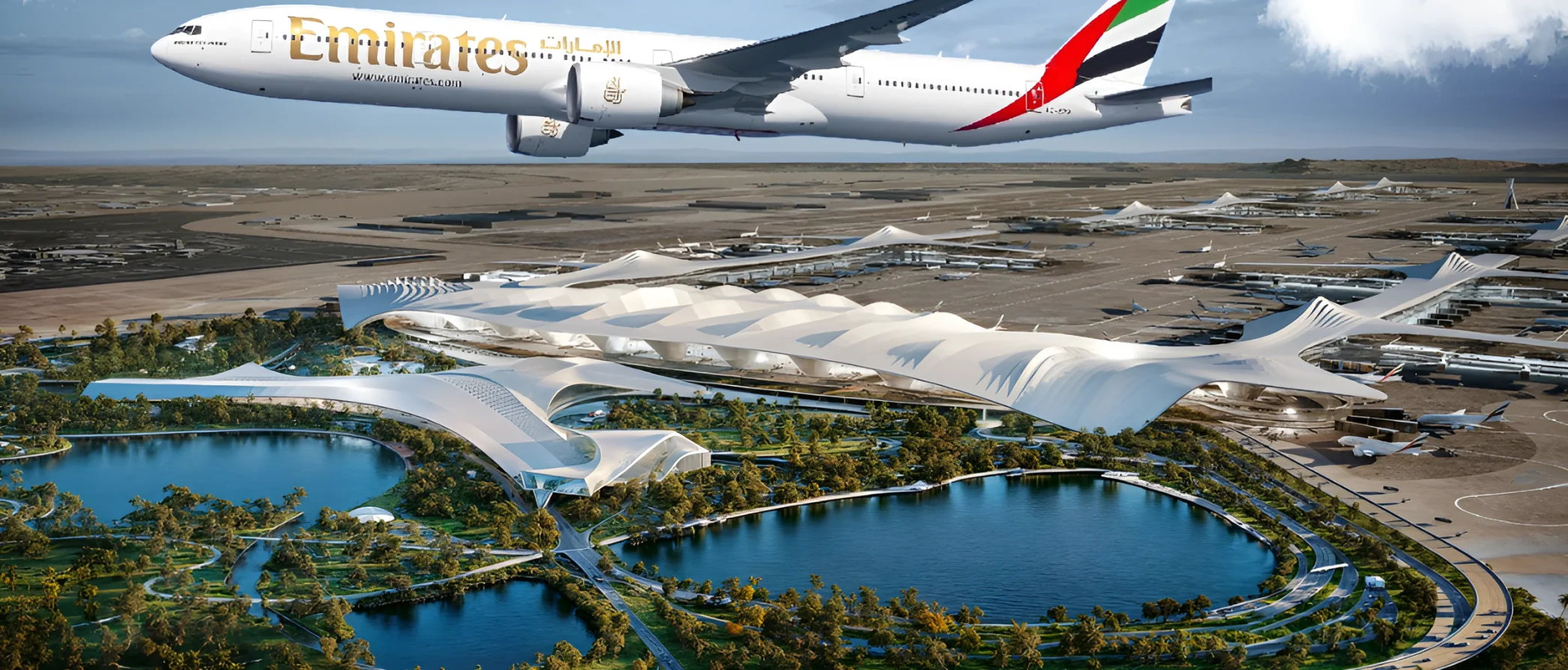
Dubai's leadership, headed by Crown Prince Sheikh Hamdan, has officially confirmed a strategic plan that will significantly shape the city's urban and infrastructure development. By 2032, all civil aviation operations will be relocated from Dubai International Airport (DXB) to the new Al Maktoum International Airport, also known as DWC.
The decision reflects the reality that DXB is approaching its operational capacity limits. By 2031, the airport is expected to handle up to 114 million passengers annually. According to Dubai Airports CEO Paul Griffiths, operating two major international aviation hubs in close proximity would not be economically viable. As a result, once the first phase of Al Maktoum Airport is completed in 2032, DXB will permanently cease civilian flight operations.
Al Maktoum International Airport has been designed to become the world's largest airport by passenger capacity upon full completion, with the ability to handle up to 260 million passengers per year. The AED 128 billion project is currently in an intensive construction phase. Contracts worth AED 13 billion are already underway, while an additional AED 55 billion in strategic contracts is being prepared for the next stage of development.
The new airport will integrate advanced technologies aimed at streamlining passenger processing and reducing waiting times. The wider airport complex will also feature a direct connection to the future Etihad Rail high-speed network, enabling passengers to travel between Al Maktoum Airport and Abu Dhabi in approximately 30 minutes.
This approved transition is expected to bring several major changes to the city.
Shift of the Economic Center of Gravity
With Dubai's northern expansion constrained by the border with the Emirate of Sharjah, future growth is naturally moving southward. Dubai South and its surrounding areas are expected to become a major logistics, commercial and residential hub, driving long-term demand for both housing and business space.
Redevelopment of Prime Central Land
Once DXB closes, a vast area of strategically located land within the city will become available for redevelopment. Leading developers have already shown interest in the site, creating future opportunities for large-scale urban transformation projects.
Reduced Pressure on Road Infrastructure
Relocating the majority of passenger and cargo traffic to the southern edge of Dubai will significantly ease congestion across the city's central and northern districts, improving overall mobility and traffic flow.
As part of Dubai's D33 economic agenda, this landmark project clearly defines the direction the emirate intends to follow in the coming decades. For investors, developers and businesses monitoring the market, 2032 represents an important milestone when planning future strategies and long-term opportunities.
Are you following Dubai's infrastructure transformation and wondering which locations are likely to benefit the most from the move to Al Maktoum Airport? Get in touch with our team and we'll be happy to share our insights.