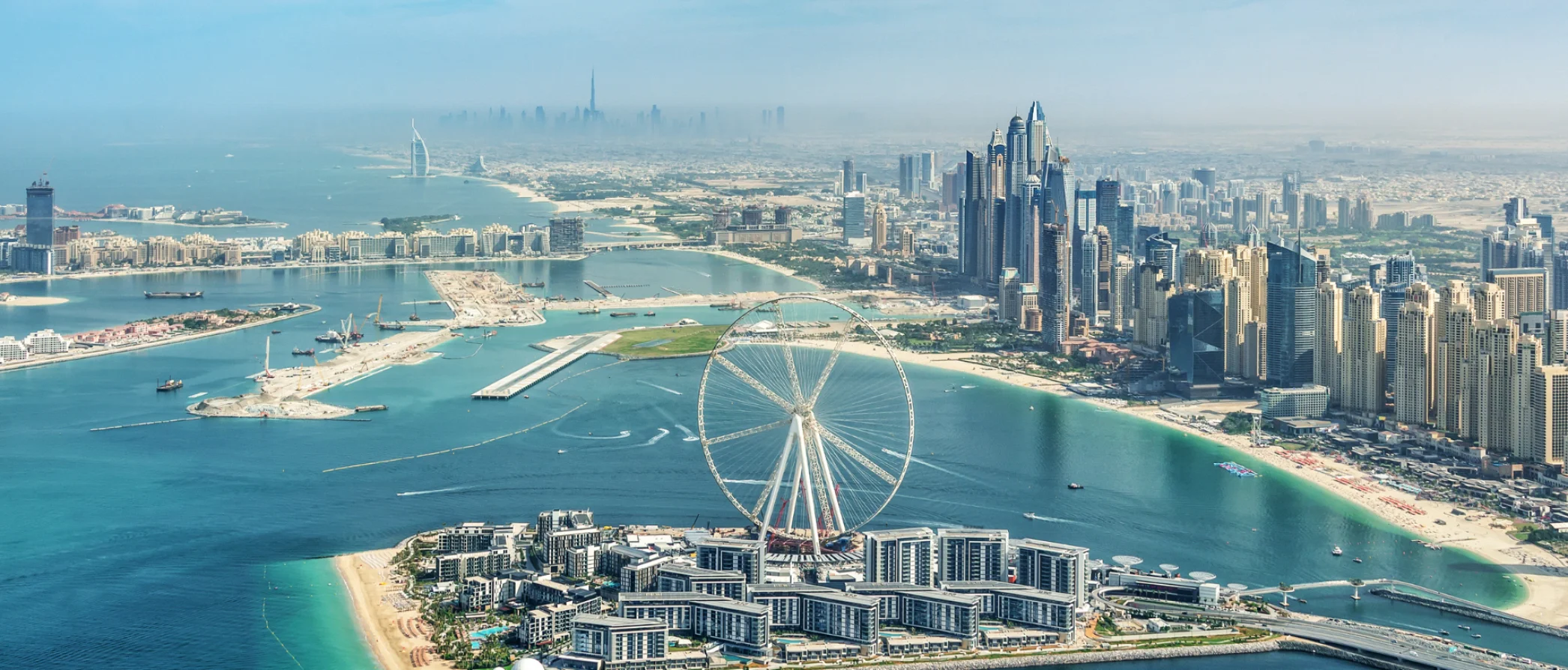
According to the latest figures published by Digital Dubai, the emirate's resident population reached 4.580 million by the end of 2025. Compared to 2024, approximately 332,000 new residents were added, representing a 7.5% year-on-year increase.
These figures are more than just statistics. Such strong population growth reflects Dubai's ongoing economic development and its growing appeal to businesses, investors and skilled professionals from around the world.
In addition to the resident population, Digital Dubai also published data on the actual number of people present in the city throughout the day.
During peak daytime hours, Dubai's population rises to 6.392 million people. Around 1.812 million individuals travel to the emirate every day for work, business, education or tourism.
This difference highlights Dubai's role as a major business and economic hub, not only for the UAE but for the wider region.
Population growth is closely linked to the city's economic performance.
In 2025, Dubai's real GDP grew by 5.4%, while the city welcomed 19.6 million international visitors, representing a 5% increase compared to the previous year.
A growing population also drives higher demand for:
Residential housing
Rental properties
Office space
Healthcare
Schools
Transport infrastructure
Retail and services
The sustained demand for housing remains one of the key factors supporting the stability of Dubai's real estate market.
The latest statistics also highlight Dubai's unique demographic structure.
More than 83% of residents are of working age, with the largest group falling between 15 and 59 years old.
By comparison, residents aged over 60 account for only around 3% of the population.
For property investors, this is an important indicator. A large economically active population creates long-term demand for both rental housing and owner-occupied homes.
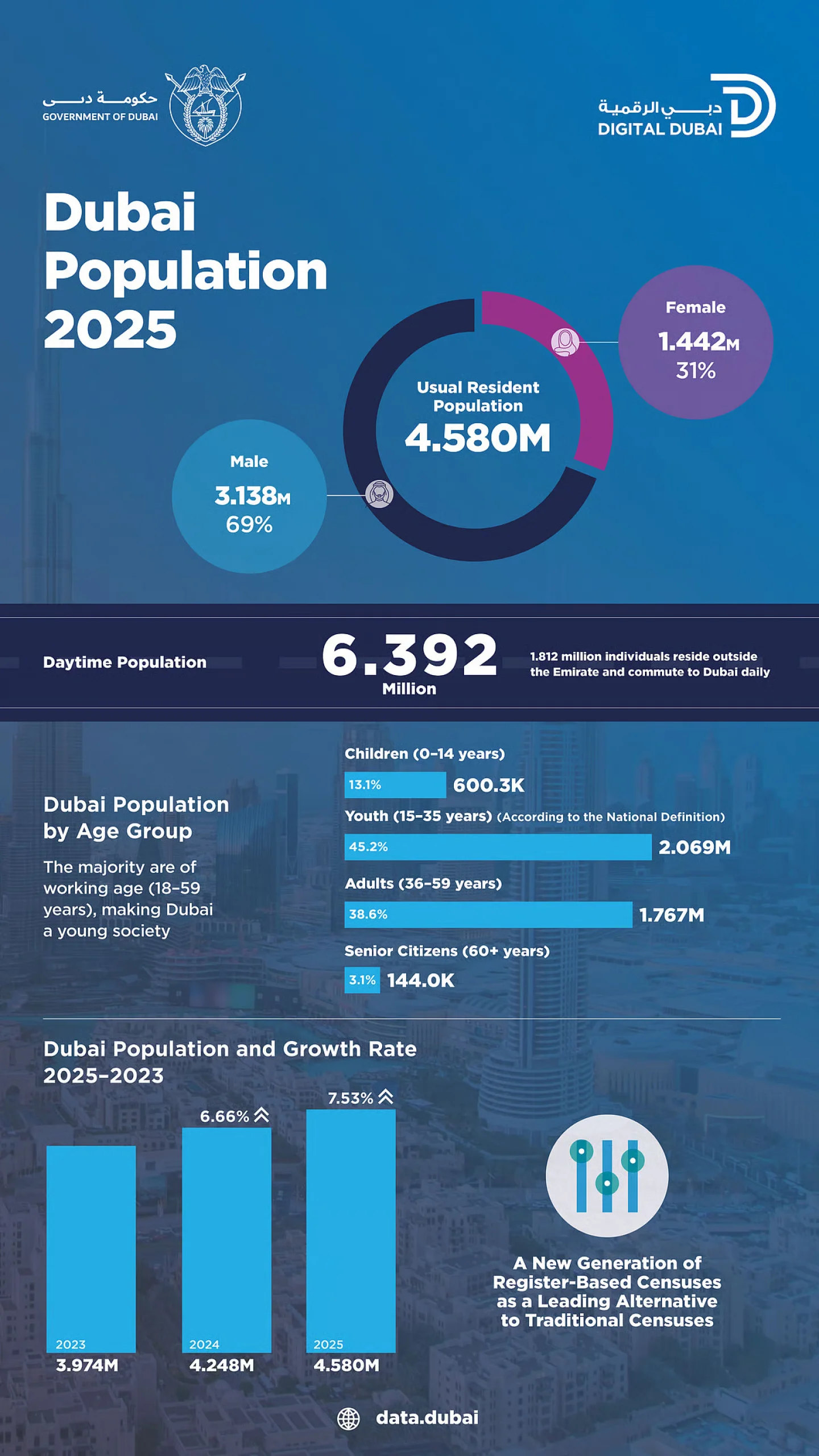
Another interesting aspect is how Dubai now measures its population.
Rather than relying solely on traditional population censuses, the city has adopted a modern digital model based on continuously updated administrative records and smart systems.
Data from government entities is integrated and analysed using artificial intelligence, allowing authorities to better plan infrastructure, transportation, healthcare and education while responding more quickly to demographic changes.
Population growth is one of the strongest indicators of a healthy real estate market.
More residents mean higher housing demand, a larger pool of tenants and continued development of new residential communities. Combined with economic growth, strong tourism and the ongoing inflow of international talent, the latest figures reinforce Dubai's position as one of the world's fastest-growing cities.
For investors, these numbers provide further confirmation of the long-term trends supporting the development of Dubai's property market.
By the end of 2025, Dubai's population reached 4.58 million, recording a 7.5% annual increase—one of the highest growth rates among developed global cities. Together with a strong economy, growing tourism and an increasingly data-driven approach to city management, these figures demonstrate Dubai's continued appeal as a place to live, do business and invest.