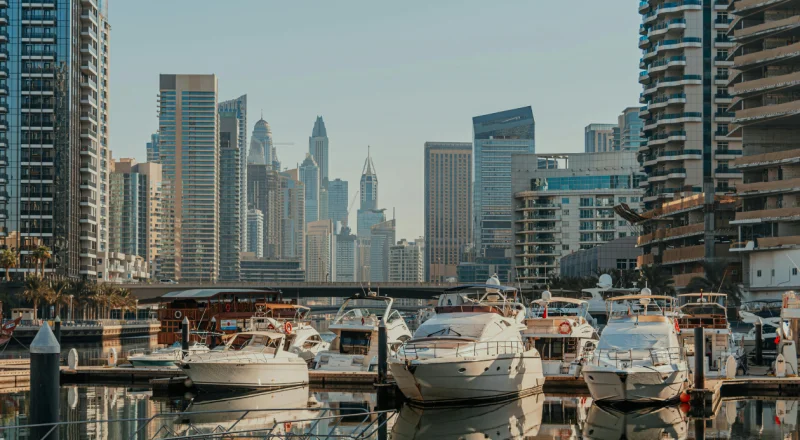

Buying property in Dubai is a well-considered investment for many Czech investors. When choosing a property, they typically focus on location, rental yields, financing options, and long-term capital appreciation. However, one important question is often overlooked: what happens to the property if its owner passes away?
If you own property in the United Arab Emirates, its transfer to your heirs will be governed not only by your wishes but also by the laws and legal procedures applicable in the UAE. While a Czech will may express your intentions, it may not, on its own, ensure a fast and straightforward transfer of assets registered in Dubai.
This is why most foreign property owners also choose to register a will directly in the United Arab Emirates. A locally registered will clearly defines who will inherit your assets and significantly simplifies the inheritance process for your family.
Many investors believe that having a will drafted in the Czech Republic is sufficient. However, when it comes to assets located abroad, the situation is often more complex.
Property in Dubai is registered with local authorities, and ownership can only be transferred in accordance with UAE legal and procedural requirements. As a result, a Czech will may not be automatically accepted without additional legal steps.
Your heirs may need to obtain:
recognition of a foreign will,
certified Arabic translations,
legalisation or higher-level authentication of documents,
a decision from the competent UAE court,
additional documentation required by local authorities.
This may result in longer probate proceedings, higher costs, and greater administrative complexity.
Current UAE legislation allows, in certain circumstances, the inheritance of non-Muslim foreign nationals to be governed by the laws of their home country. However, this does not automatically mean that a Czech will replaces a locally registered UAE will or eliminates all formalities related to transferring property in the UAE.
For this reason, legal professionals generally recommend separating assets by jurisdiction. A Czech will should cover assets located in the Czech Republic, while a UAE-registered will should govern assets located in the United Arab Emirates. Both documents should be carefully prepared to ensure they do not conflict with each other.
If a property owner dies without a will registered in the UAE, it does not automatically mean that the property will pass to the state. However, the estate will be administered according to statutory inheritance rules through the competent court.
This may involve:
longer probate proceedings,
temporary freezing of UAE bank accounts,
delays in transferring property to beneficiaries,
the need to submit and translate foreign documents,
higher administrative and legal costs.
Today, UAE legislation gives non-Muslim foreign nationals considerably more freedom to distribute their assets according to their wishes than in the past. Nevertheless, without a properly prepared will, the estate may not be distributed as the owner intended.
Complications may arise, for example, if you wish to:
leave the property exclusively to your spouse,
divide multiple properties among different beneficiaries,
appoint an executor of your will,
own assets both in the Czech Republic and the United Arab Emirates,
leave assets to a minor child while ensuring proper management until adulthood.
A locally registered will is therefore much more than a legal formality. It is the most effective way to clearly express your wishes and make the transfer of your assets significantly easier for your heirs.
Many investors associate a will only with real estate. In reality, depending on its scope, it can also cover other assets and appoint the person responsible for administering your estate.
A UAE will may include:
an apartment, villa, or other real estate,
ownership shares in property,
UAE bank accounts,
investments,
business interests,
vehicles and other valuable assets,
the appointment of an executor.
If your assets are to be inherited by a minor child, it is advisable to consider in advance how those assets will be managed until the child reaches adulthood. Questions concerning personal guardianship are generally governed by the laws of the country where the child normally resides, rather than by the fact that a parent owned property in the UAE.
The United Arab Emirates offers several options for registering a will for non-Muslim foreign asset owners. The most suitable option depends primarily on your residency status, the type of assets you own, and your individual circumstances.
Dubai Courts
Dubai Courts is one of the most common options for registering a will for UAE residents.
The will is registered within the local court system and serves as the legal basis for probate proceedings in Dubai.
This option is generally suitable for clients who have:
an Emirates ID,
a UAE residence visa.
Ministry of Justice
The Ministry of Justice offers a federal will registration system that is also available to foreign asset owners.
This option is often most suitable for clients who:
do not have an Emirates ID,
do not hold a UAE residence visa,
own property in the UAE as a foreign investment.
DIFC Wills Service Centre
The DIFC Wills Service Centre was established as a dedicated will registry for non-Muslims.
It allows the registration of different types of wills, including wills covering only real estate, financial assets, or an individual's entire estate located in the UAE. One of its key advantages is that it operates under common law principles and conducts the entire process in English.
Subject to meeting the applicable requirements, non-residents of the UAE may also register a will through the DIFC Wills Service Centre.
Abu Dhabi Judicial Department
Another option is to register your will through the Abu Dhabi Judicial Department.
The process is largely digital and includes online application submission, document verification, and identity confirmation via video conference.
This option is available to both UAE residents and, under certain conditions, foreign property owners.
There is no one-size-fits-all solution for every investor. The right option depends primarily on:
your residency status,
your nationality,
the type and location of your assets,
the scope of your will,
your preferred registration process.
At BuyDubai, we help clients assess their individual circumstances and arrange will registration through either Dubai Courts, DIFC or the Ministry of Justice. If another option is better suited to your situation, we will recommend the most appropriate solution.
The exact documentation required depends on the chosen registration route and your individual circumstances. In most cases, you will need the following:
Documents
Passport or Emirates ID,
Title Deed, if the property has been completed and transferred to the owner,
Oqood, if the property is still under construction or is being paid according to the developer's payment plan.
When preparing your will, you will also need to provide information about:
the owner of the assets,
the intended beneficiaries,
how the assets should be distributed,
the appointed executor,
the assets covered by the will.
Depending on your specific circumstances, additional documents or information may also be required.
The process is much simpler than most investors expect. In most cases, there is no need to deal with multiple institutions or study local legislation on your own.
1. Initial Consultation
We begin by reviewing your individual situation.
We will discuss, for example:
what assets you own in the UAE,
whether you have an Emirates ID or a UAE residence visa,
who you wish to appoint as your beneficiary,
whether you already have a will prepared in the Czech Republic or another country.
Based on this information, we will recommend the most suitable registration option.
2. Document Review
Next, we review all the required documents.
These typically include:
your passport or Emirates ID,
your Title Deed or Oqood,
beneficiary details,
property identification documents.
This allows us to prepare your will accurately and avoid unnecessary amendments during the registration process.
3. Drafting the Will
Based on the information provided, we prepare a draft of your will.
The document clearly specifies:
who the beneficiaries will be,
how your assets will be distributed,
who will act as the executor,
which assets are covered by the will.
If you already have a will prepared in the Czech Republic, it is important that the new document does not invalidate or conflict with it. Both wills must therefore be carefully coordinated.
4. Review and Approval
Before registration, you will receive the draft will for review.
You will verify:
your personal details,
property information,
beneficiary details,
the distribution of your assets,
the executor's information.
Registration proceeds only after you approve the final version.
5. Registration
Once signed, your will is registered through the selected authority.
Depending on the chosen registration route, the process may include:
identity verification,
a video conference,
an electronic signature,
an in-person appointment with the relevant authority.
Today, many of these steps can be completed online, making the process considerably easier than in the past.
6. Secure Storage and Future Updates
Once your will has been registered, we recommend storing it in a safe place and informing your executor or close family members of its existence.
Your will should be reviewed and updated whenever:
you purchase another property,
you sell one of your properties,
you get married or divorced,
your beneficiaries change,
you obtain UAE residency,
there is a significant change in your financial or family circumstances.
Do I Need to Update My Will When I Buy Another Property?
Not necessarily.
It depends on how your will has been drafted. Some wills list individual properties specifically, while others are written more broadly to include future assets acquired in the UAE.
For this reason, it is advisable to address this issue when preparing your will.
Is a Will Important If I Own Only One Property?
Yes.
Even a single investment apartment may represent a significant portion of your family's wealth. The purpose of a will is not only to protect large property portfolios but, above all, to ensure a smooth transfer of assets to your beneficiaries.
Can a Czech Will Replace a Will Registered in the UAE?
In certain situations, a Czech will may be taken into account during probate proceedings.
However, this does not mean it will automatically be accepted or that it eliminates all legal formalities related to transferring assets located in the UAE.
For this reason, most foreign investors choose to register a separate will directly in the United Arab Emirates.
Who Should Register a Will?
We recommend registering a will if you:
own an apartment, villa, or any other property in Dubai,
have purchased an off-plan property,
own multiple properties in the UAE,
have a UAE bank account or other investments,
want to decide who will inherit your assets,
own assets both in the Czech Republic and in the United Arab Emirates.
We Can Help You Every Step of the Way
Preparing a will does not have to involve complicated legal research or dealing with multiple authorities.
At BuyDubai, we guide our clients through the entire process by:
assessing their individual situation,
recommending the most suitable registration option,
reviewing all required documents,
preparing the draft will,
guiding them through the registration process,
coordinating the entire process with the relevant legal professionals.
Depending on your circumstances, we arrange registration through either Dubai Courts, DIFC or the Ministry of Justice.
Our goal is to make the entire process as simple as possible while ensuring your investment remains protected for the future.
Buying property in Dubai is a long-term investment. It is equally important to consider what will happen to that investment in the future.
A properly drafted and registered will helps ensure that your assets are transferred according to your wishes and that your loved ones do not face unnecessary legal complications abroad.
If you own property in the UAE and want the peace of mind that it will one day be transferred according to your wishes, get in touch with us. We will be happy to assist you with both the preparation and registration of your will.