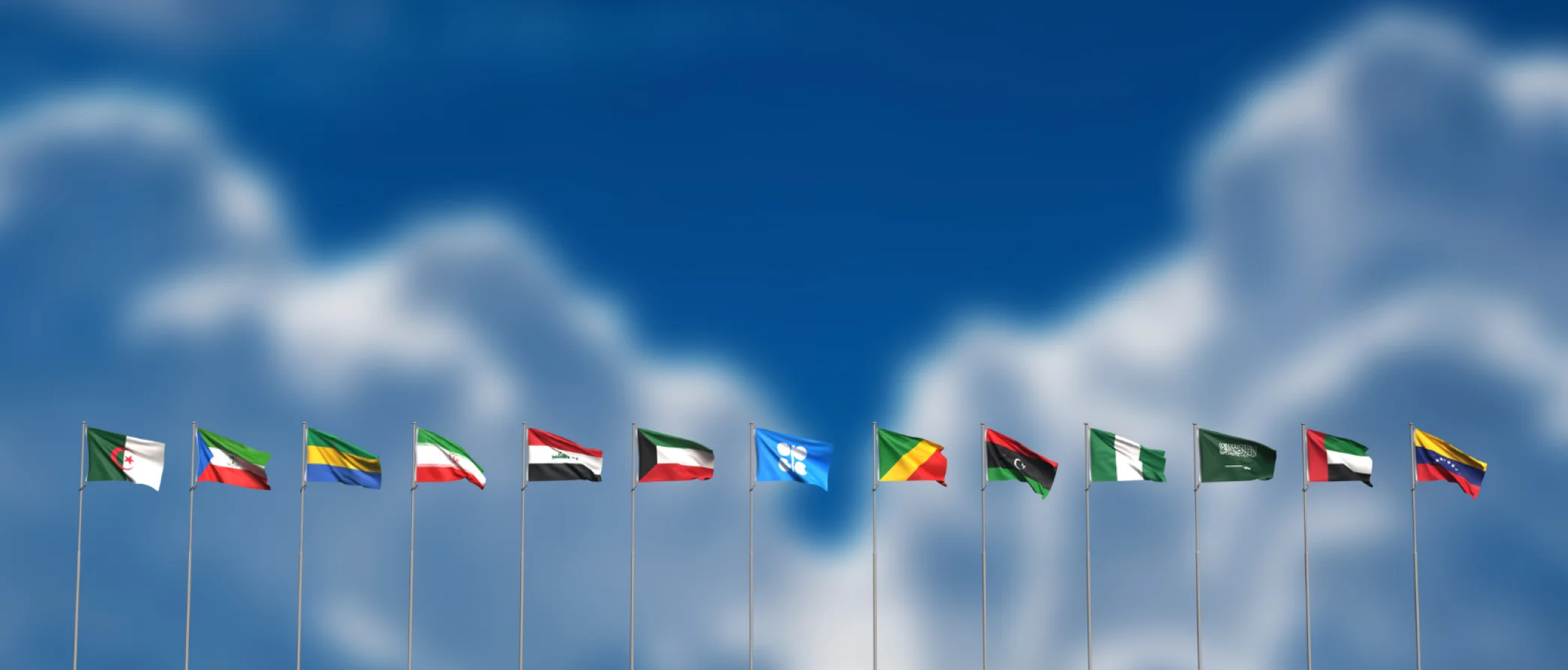
The United Arab Emirates has announced that it will officially leave OPEC and the broader OPEC+ group on May 1, 2026. For the global energy market, this marks one of the biggest shifts in recent years. The UAE was far from a marginal member. It ranked among the cartel’s largest oil producers and was also one of the few countries capable of rapidly increasing production.
The decision comes at a time when the region is being destabilized by tensions with Iran, oil prices are rising sharply, and global energy security remains under pressure. Yet the UAE’s departure from OPEC is not simply a reaction to war or current oil prices. In reality, it represents a long-term strategic shift.
OPEC was established in 1960 as an organization of oil-exporting countries. Its primary goal was to coordinate oil production and influence global oil prices. The principle is simple: when member states produce less oil, prices usually rise. When production increases, prices tend to fall.
For economies heavily dependent on oil revenues, this model was highly beneficial for decades.
But today, the UAE operates very differently from when it first joined OPEC. While the Emirati economy was once almost entirely dependent on oil, the energy sector now accounts for less than a quarter of the country’s GDP. Dubai has evolved into a global hub for trade, finance, logistics, and real estate. Meanwhile, Abu Dhabi has invested hundreds of billions of dollars into infrastructure, technology, artificial intelligence, and international investments.
Oil remains a critical source of revenue for the UAE but it is no longer the only pillar of the economy.
This is especially important for the real estate sector. Dubai’s market today is driven primarily by capital inflows, international companies, investors, talent, and long-term economic growth. At the same time, oil revenues still finance a significant share of federal investments into infrastructure, transportation, tourism, and urban development.
The UAE’s exit from OPEC is mainly rooted in one very specific economic issue.
In recent years, the UAE has heavily invested in expanding oil production through the state-owned company ADNOC. The country can currently produce around 4.85 million barrels of oil per day and plans to increase capacity to 5 million barrels by 2027.
However, under OPEC rules, the UAE was only allowed to produce roughly 3.2 million barrels per day.
In other words, the country invested tens of billions of dollars into new production capacity that it was ultimately unable to fully utilize. That is precisely where OPEC started becoming a limitation rather than an advantage.
The broader long-term outlook has also changed. The UAE understands that the world is gradually moving toward an energy transition. Pressure is growing for renewable energy, electric mobility, and lower emissions. The industry increasingly talks about “peak oil demand”, the point at which global oil demand reaches its peak and gradually begins to decline.
From the UAE’s perspective, it therefore makes sense to maximize the value of its reserves while global demand for oil remains strong and oil is still essential to the world economy.
This matters for Dubai as well. Higher production means higher state revenues. And those revenues are then reinvested into infrastructure, new developments, economic diversification, and support for non-oil sectors that continue to drive demand for residential and commercial real estate.
In the short term, the UAE’s departure from OPEC is unlikely to dramatically impact property prices. Today, Dubai’s real estate market is influenced far more by regional security, interest rates, construction activity, and international demand.
More important, however, is the signal the UAE is sending about its future direction. The Emirates want greater control over their economy while continuing to strengthen the sectors driving Dubai’s growth today - finance, technology, logistics, tourism, and international trade.
For the real estate market, the key takeaway is that higher oil revenues could continue financing infrastructure, urban expansion, and strategic projects that attract businesses, investors, and international professionals to Dubai.