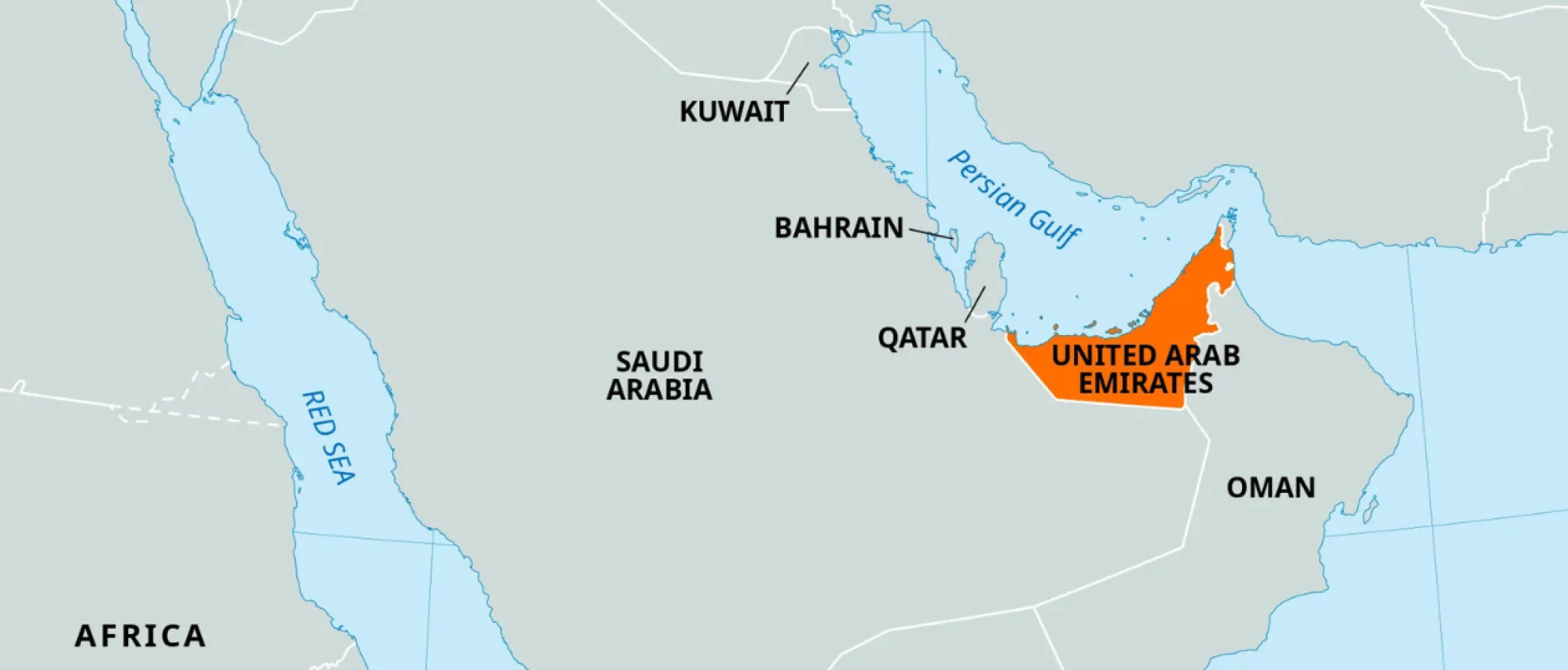
The United Arab Emirates lies on the Arabian Peninsula, on the southeastern coast of the Persian Gulf, between Saudi Arabia and Oman. A smaller part of the country's territory in the east, the emirate of Fujairah, also has access to the Gulf of Oman, which is part of the Indian Ocean. The country's strategic position along the Strait of Hormuz, through which a large share of the world's maritime oil transport flows, makes the UAE one of the most geopolitically important points in the region.
For a Czech or Slovak reader, the most practical question is probably how far it actually is to the UAE. A direct flight from Prague to Dubai takes roughly 6.5 to 7 hours, and the straight-line distance is about 4,470 km. From Vienna and Bratislava, the distance is practically identical, and flight time differs only by tens of minutes. The UAE sits in the GST time zone (UTC+4) and does not observe daylight saving time, so the time difference from Central Europe is 3 hours in winter and 2 hours in summer.
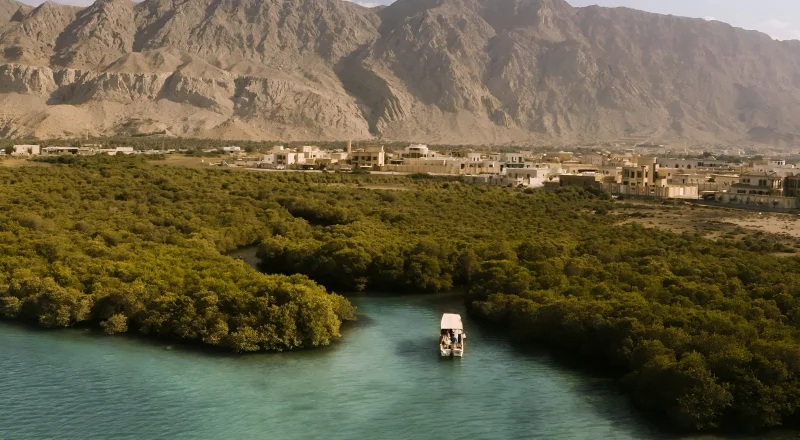
The total area of the United Arab Emirates is approximately 83,600 km², roughly the same size as Austria. The vast majority of the territory is desert and mountainous terrain, sandy and rocky deserts, salt flats (known as sabkha) stretching deep inland, and in the east the Hajar mountain range, which runs along the border with Oman. The country's highest point is the peak of Jebel Jais in the emirate of Ras Al Khaimah, at 1,934 metres.
The climate is desert, with very hot and humid summers (temperatures regularly above 40°C) and mild, pleasant winters. Rainfall is minimal, and the country has long struggled with a shortage of natural freshwater resources, which has driven the large-scale development of desalination facilities.
The United Arab Emirates was formed on 2 December 1971, when six emirates united: Abu Dhabi, Dubai, Sharjah, Ajman, Umm Al Quwain, and Fujairah. Ras Al Khaimah joined the federation a few months later, in February 1972. The founding father of the country is considered to be Sheikh Zayed bin Sultan Al Nahyan, then Ruler of Abu Dhabi, whose vision of unity, stability, and long-term development is the reason the federation still works the way it does today: each emirate retained its own identity, yet united under one flag and one federal system.
The capital of the federation is Abu Dhabi. The official language is Arabic, though English is widely used in business, tourism, and everyday interaction with foreigners, since the vast majority of the UAE's population are foreign residents rather than native Emiratis. The official religion is Islam. The country's constitution was permanently adopted in July 1996 and defines both the basic structure of the federation and the rights of its citizens.
It is important not to mix up the terms in this system. There is only one president in the UAE, who stands at the head of the entire federation, similar to a president in our own countries. Each individual emirate, by contrast, is headed by its own Ruler (in Arabic, Hakim), seven in total, whose title differs from that of the president, even though they too are referred to as sheikhs.
The highest constitutional authority in the country is the Federal Supreme Council, made up of these seven rulers of the emirates, with each emirate holding one vote. The Council approves federal laws, ratifies international treaties, and elects the president and vice president of the federation from among its members. In practice, major decisions require a majority of five votes, which must always include the consent of Abu Dhabi and Dubai, meaning these two largest and economically strongest emirates carry effectively greater weight in the system than the remaining five.
By tradition, though this is not a written rule in the constitution, the Ruler of Abu Dhabi is elected president of the federation, and the Ruler of Dubai becomes vice president and prime minister. The other five rulers, of Sharjah, Ajman, Umm Al Quwain, Ras Al Khaimah, and Fujairah, hold no automatic federal role; they are heads of their own emirate and members of the Federal Supreme Council. The current president of the UAE, since May 2022, is Sheikh Mohamed bin Zayed Al Nahyan, Ruler of Abu Dhabi. The vice president and prime minister is Sheikh Mohammed bin Rashid Al Maktoum, Ruler of Dubai.
Each emirate also has its own local government and a significant degree of autonomy, particularly over natural resources (oil, for example, remains under the jurisdiction of the individual emirate), local laws, and its budget. It is precisely this combination of a strong federal level and preserved independence for each emirate that is key to understanding why Abu Dhabi, Dubai, and the remaining five emirates differ so much in practice.
Abu Dhabi, Capital and Largest Emirate
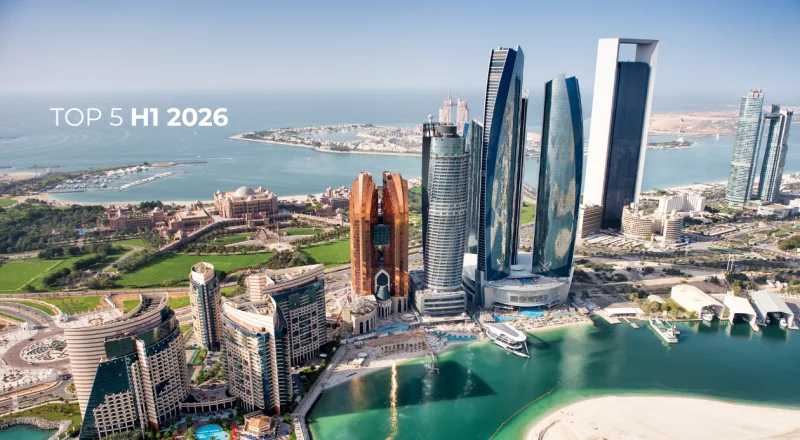
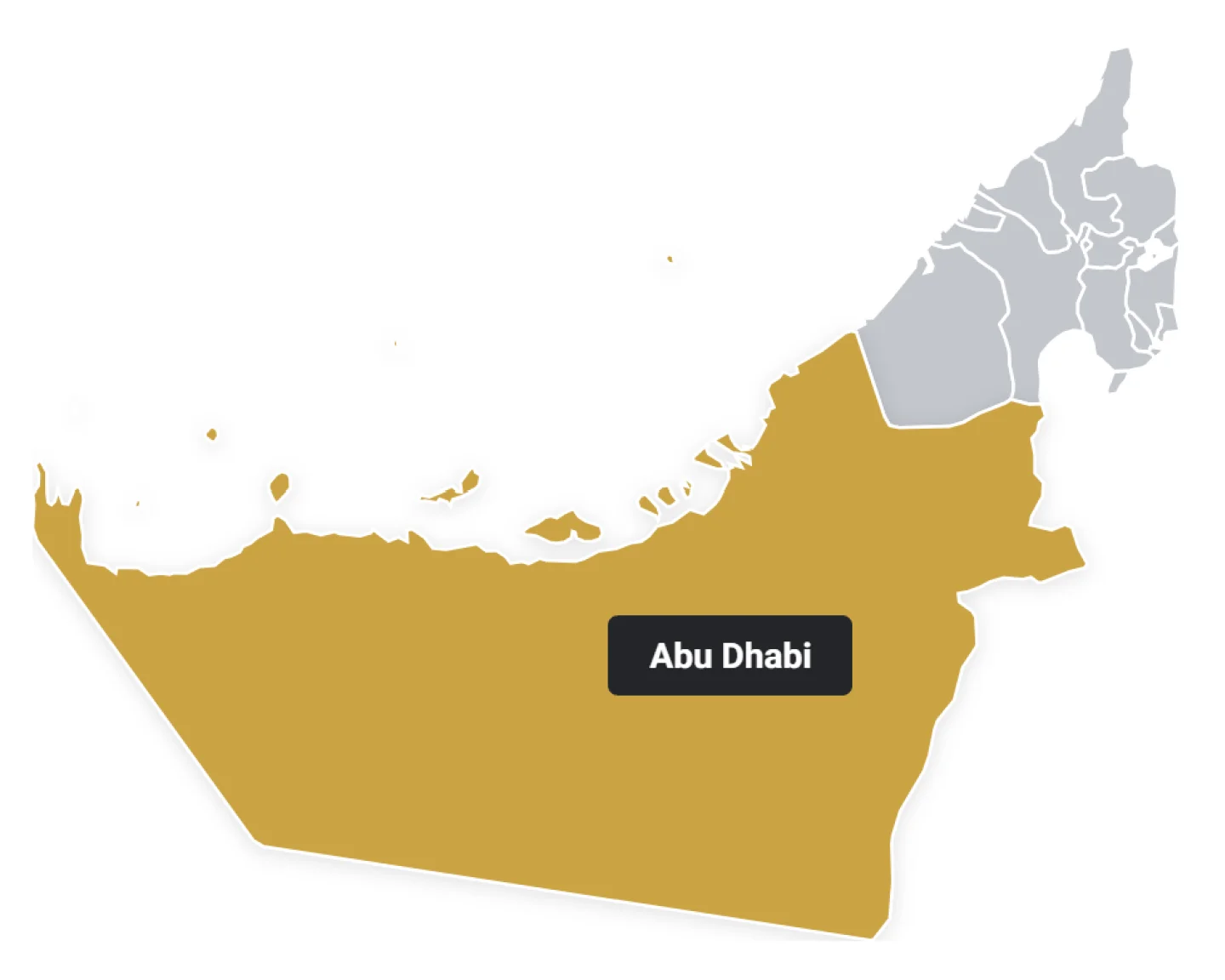
Abu Dhabi, with an area of 67,340 km², is by far the largest emirate, occupying almost 84% of the country's total area. It is the federal capital and seat of government. The emirate has more than 200 natural islands and a 700 km coastline. In 2024, its population exceeded 4.1 million, and the emirate's GDP reached approximately AED 1.2 trillion. Its economy rests on oil and natural gas, but it is diversifying significantly, being home to the ADX stock exchange, the Abu Dhabi Global Market financial centre, and the world's largest single-site solar plant, Al Dhafra Solar PV.
Dubai, Commercial and Tourist Hub
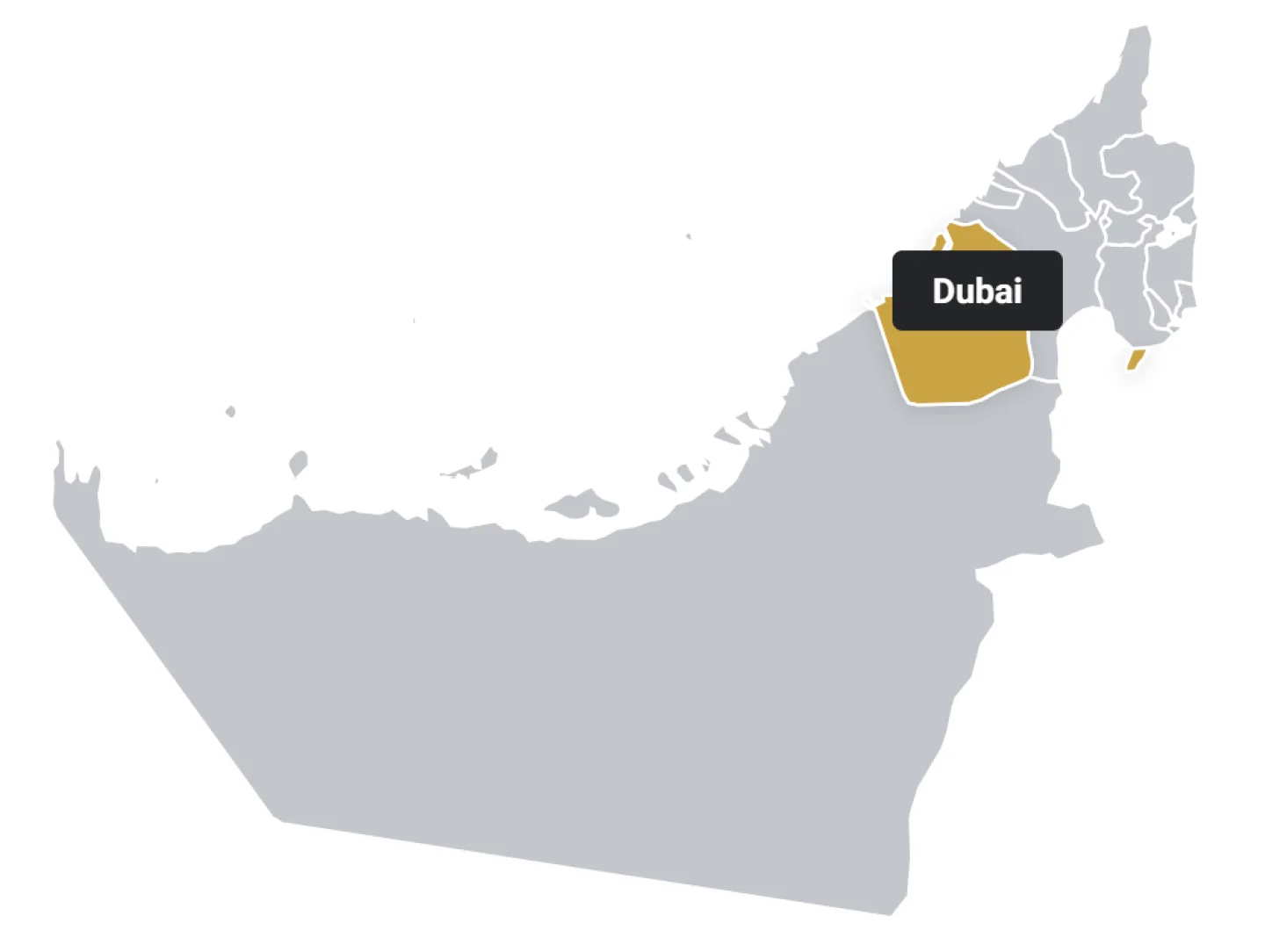
Dubai is the second largest emirate, with an area (excluding islands) of 4,114 km², about 5% of the UAE's territory. Despite its smaller size, it is the globally best-known emirate thanks to its role as a commercial, financial, and tourist hub, home to the Burj Khalifa, the world's tallest building, and the Dubai International Financial Centre. Dubai's economy rests on trade, services, and finance rather than oil. The ruling family, the Al Maktoum, has governed the emirate since 1833.
Sharjah, Cultural Capital of the Arab World
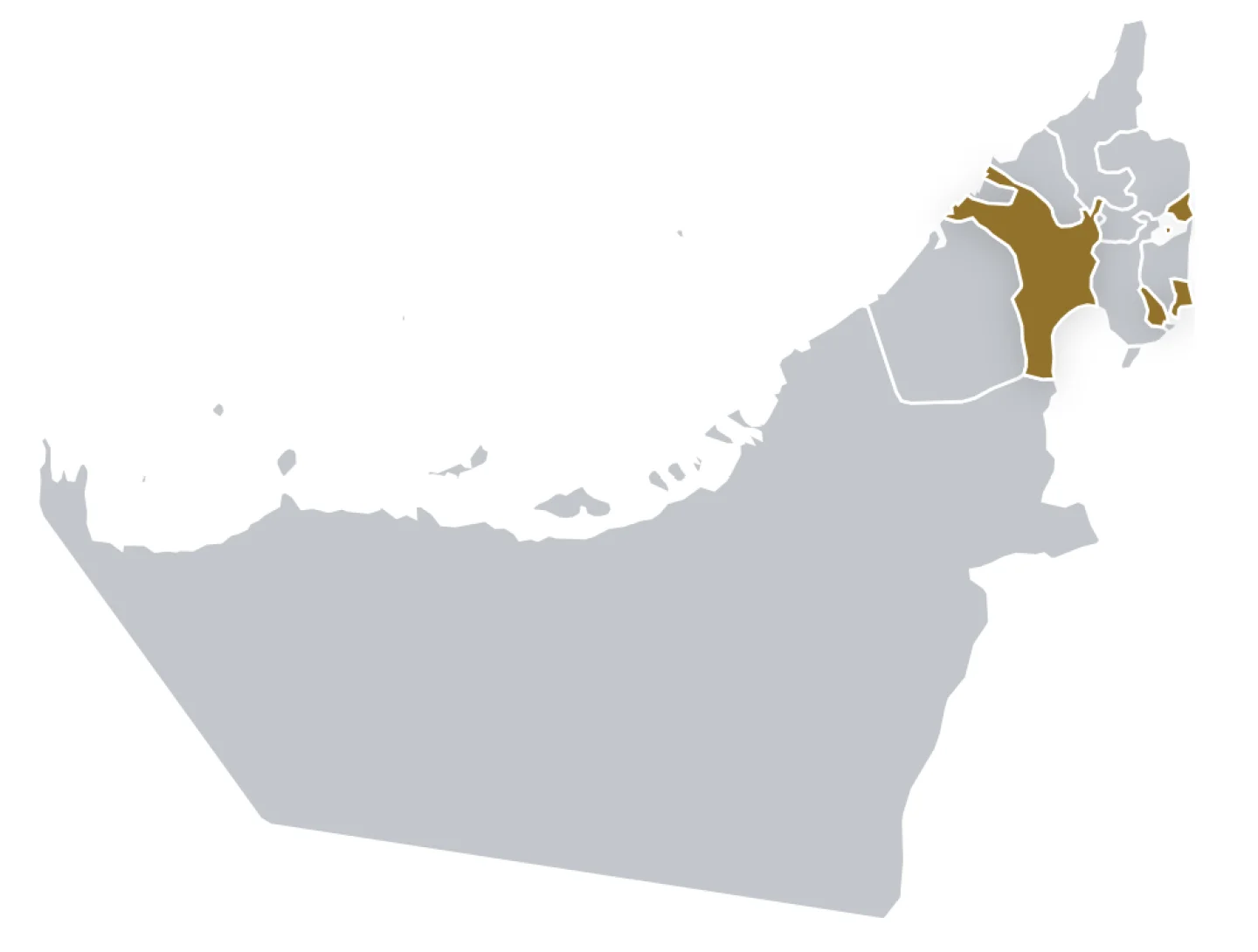
Sharjah is the third largest emirate (2,590 km²) and the only one that lies on both the Persian Gulf and Gulf of Oman coasts. In 2022, its population was approximately 1.8 million. Since 1998, Sharjah has held the title of UNESCO Cultural Capital of the Arab World and is home to nearly a quarter of all museums in the UAE. Unlike neighbouring Dubai, it enforces stricter rules stemming from a more conservative interpretation of local customs, including a complete ban on alcohol sales and consumption.
Ajman, the Smallest Emirate
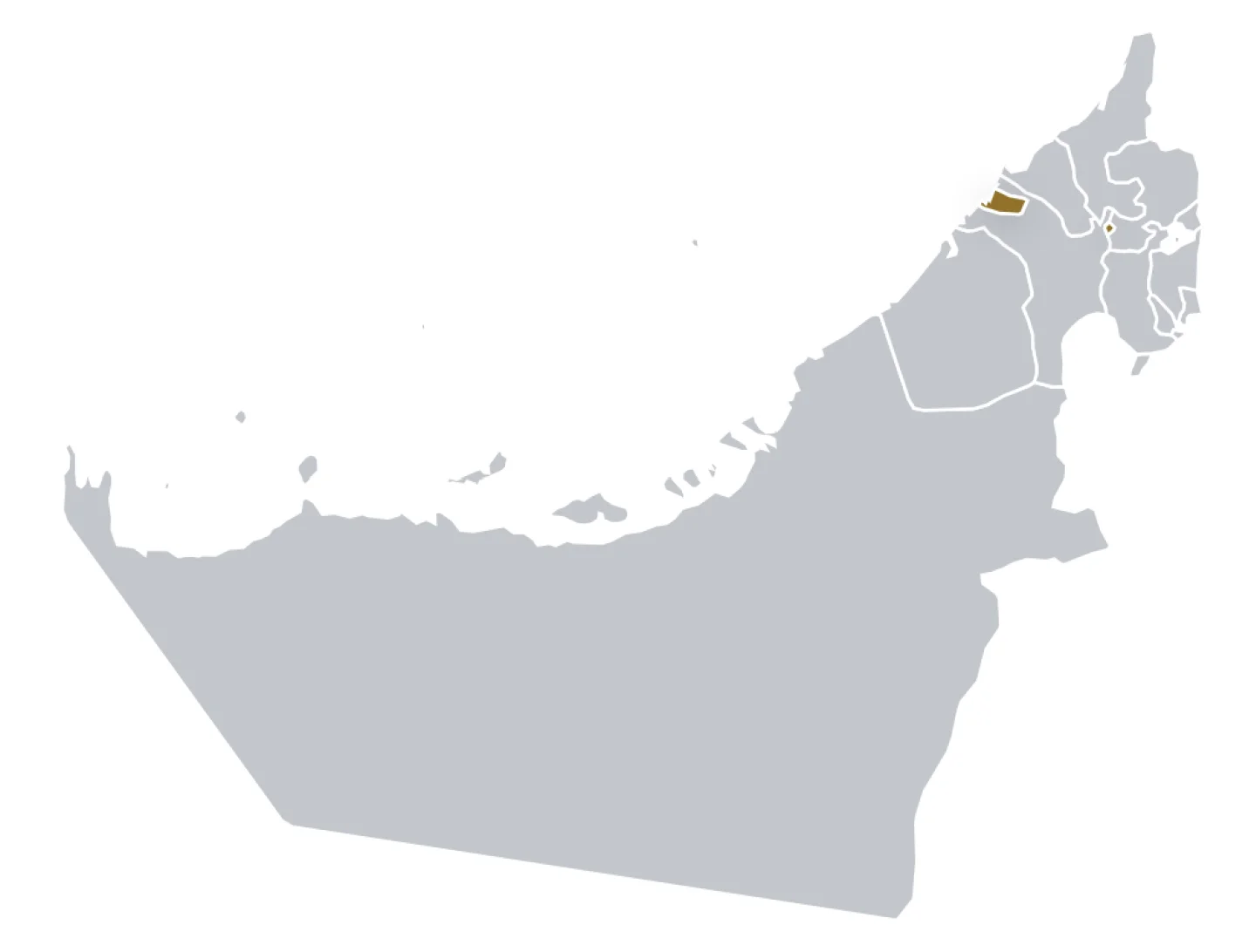
Ajman, with an area of just 259 km², is the smallest of the seven emirates, making up about 0.3% of the country's area. It lies between Sharjah and Umm Al Quwain. Despite its small size, it is a modern emirate with its own port and free zone (Ajman Free Zone), whose GDP exceeded AED 36 billion in 2023.
Umm Al Quwain, the Least Populated Emirate
Umm Al Quwain is the second smallest emirate (approximately 720 km²) and the least populated of all seven. Its economy has traditionally relied on fishing, and the emirate exports seafood to Europe and the Middle East. Umm Al Quwain is also the only emirate where, according to available data, women slightly outnumber men among Emirati citizens.
Ras Al Khaimah, Mountains, Beaches, and Growing Tourism
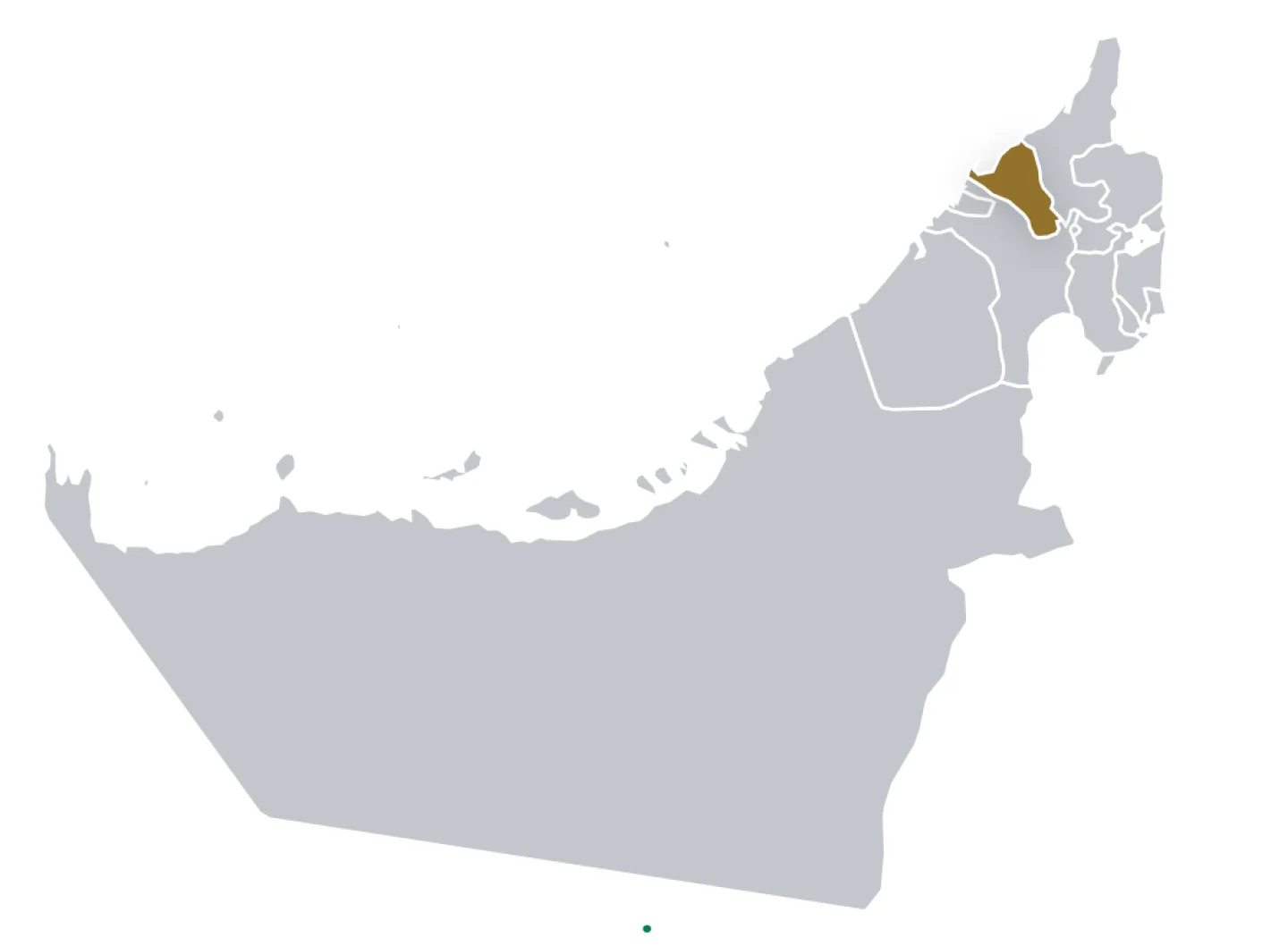
Ras Al Khaimah lies at the northernmost tip of the UAE, bordering Umm Al Quwain, Fujairah, and Sharjah, and also shares an international border with Oman. With an area of 1,684 km², it is the fourth largest emirate. It has a rich history stretching back some 7,000 years; under the name Julfar, it was one of the most prominent trading ports in the Persian Gulf during the 13th and 14th centuries. Today, the emirate is known for its diversified economy (no single sector accounts for more than 30% of GDP) and rapidly growing tourism sector, home among other things to the UAE's highest mountain, Jebel Jais.
Fujairah, the Only Emirate on the Eastern Coast
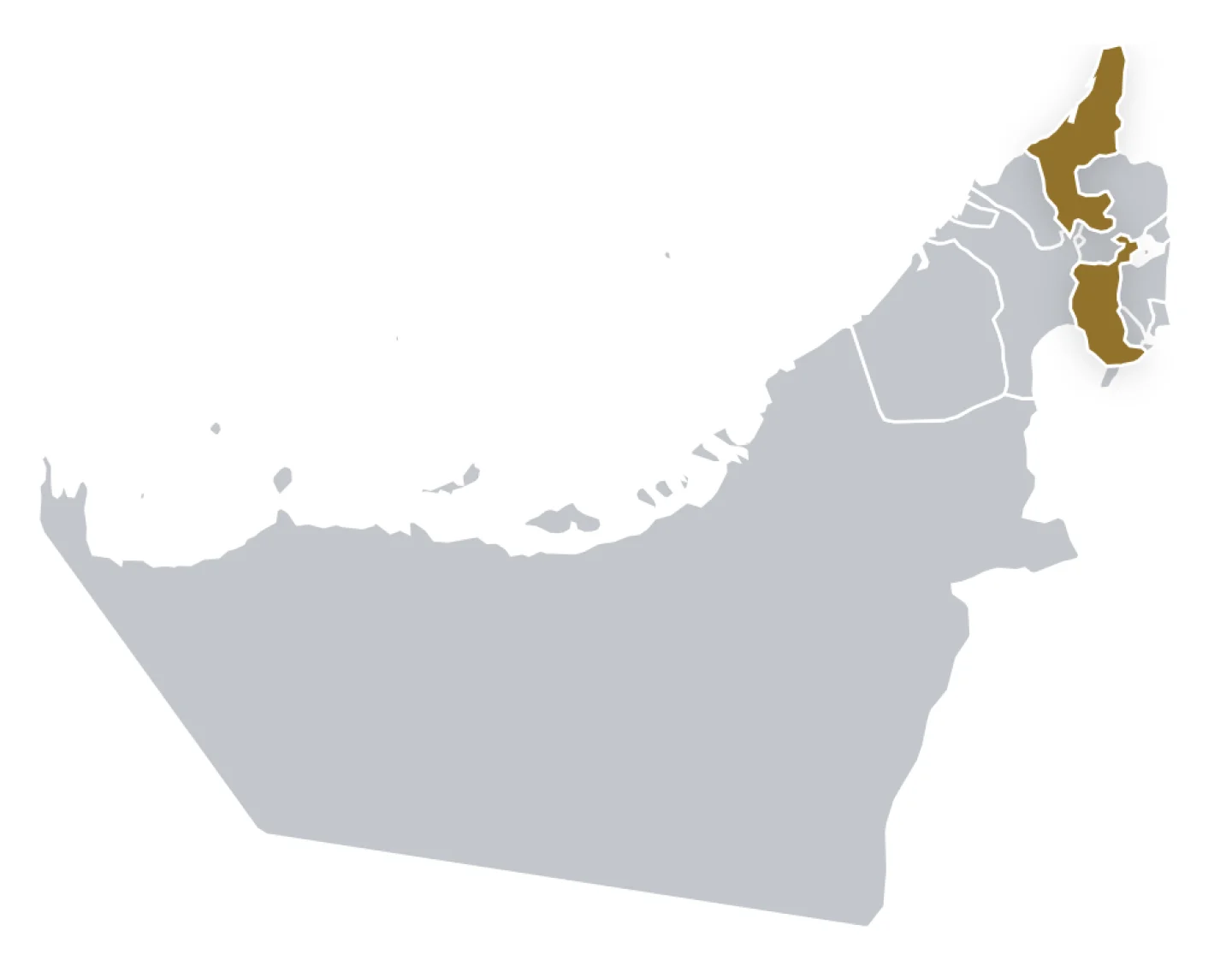
Fujairah is the only emirate located entirely on the country's eastern coast, along the Gulf of Oman. Its coastline stretches for about 70 km. Thanks to its position on the Indian Ocean, it has a strategic port used for major global shipping routes and is the only place in the UAE with direct access to this ocean. Because of its location, the climate is milder than in Abu Dhabi or Dubai, making Fujairah a popular destination for weekend trips.
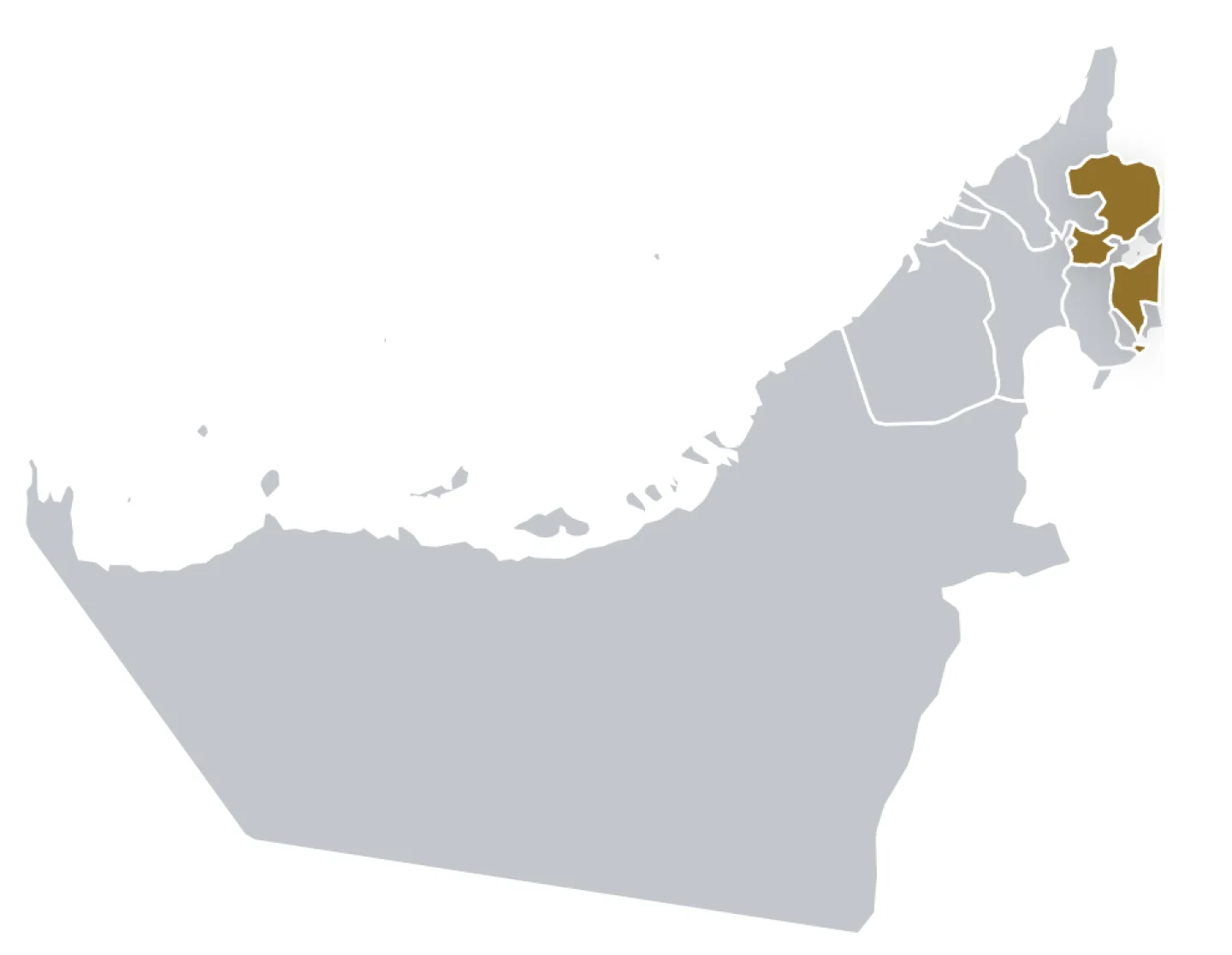
The United Arab Emirates is a federation of seven very different emirates, from vast, oil-rich Abu Dhabi through the global commercial hub of Dubai to smaller, quieter emirates such as Umm Al Quwain or Ajman. Each has its own ruling family, economy, and character, yet all are held together by a federal system founded in 1971. Understanding this structure is the foundation for grasping why investment, tourism, and business interest in the region concentrates so heavily in Abu Dhabi and Dubai, and why the remaining five emirates offer a completely different, quieter kind of experience.