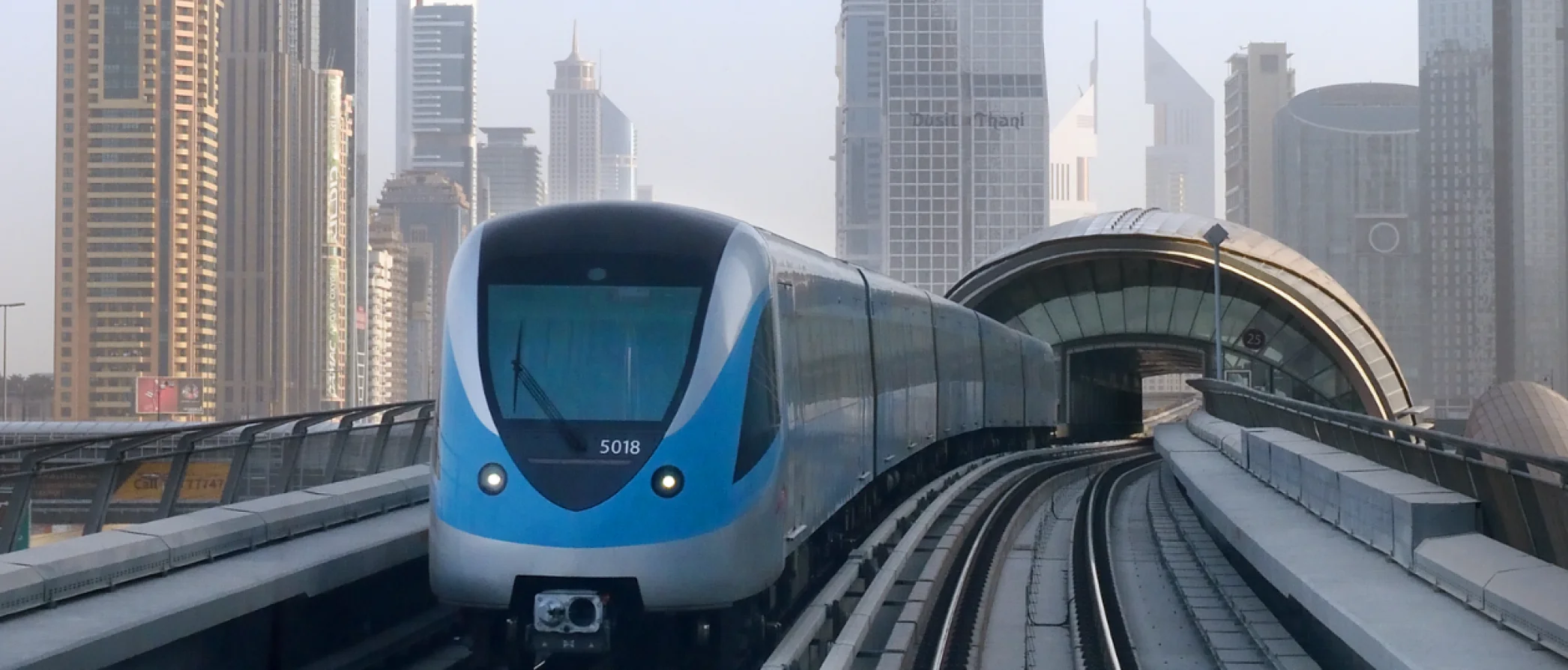
Dubai Metro began operations on September 9, 2009, and has since carried nearly 3 billion passengers. Today it accounts for 40% of total public transport ridership in the emirate, making it one of the key pillars of mobility in Dubai. This success underpins the Roads and Transport Authority's (RTA) decision to continue expanding the network at pace.
The announcement was made by RTA at a press conference for the upcoming RailX Dubai conference.
According to RTA, the Dubai Metro network will grow from its current 90 kilometres to 162 kilometres, an increase of 80 percent. Two key projects will drive this expansion:
Project | Completion | Status |
|---|---|---|
Blue Line | 2029 | currently under construction |
Gold Line | 2032 | tender to be issued by end of 2026 |
The combined estimated investment in both lines is approximately AED 55 billion. The projects are being delivered by Emirati engineers and experts working alongside international specialists, whose combined experience exceeds 2,500 years.
The metro expansion was announced alongside preparations for the inaugural RailX Dubai Conference and Exhibition, taking place from May 31 to June 2, 2027, at Dubai World Trade Centre under the theme "Building the Future of Rail and Mobility."
The event is held under the patronage of the Crown Prince of Dubai. It is expected to draw more than 5,000 delegates, over 60 exhibitors and more than 70 speakers from government, investment and transport infrastructure backgrounds.
The conference programme will focus on five key themes:
REACH – regional connectivity across the GCC, Middle East, Africa and South Asia
ADVANCE – technologies such as artificial intelligence, automation, predictive maintenance and digital twins
INVEST – financing models for large infrastructure projects, such as PPP (public-private partnership) or green bonds and sukuk (Islamic bonds that must comply with sharia principles and are a common financing tool for large-scale projects in the Gulf region)
LINK – integrated transport strategies and multimodal connectivity
X-PERIENCE – customer experience and station accessibility
The metro's development is directly tied to RTA's Strategic Plan 2030 and to the Dubai 2040 Urban Master Plan, which aims to create a more connected and integrated city with a stronger role for public transport in quality of life and urban development. RTA also expects RailX Dubai to support the emirate's broader economic ambitions by attracting investment, boosting business tourism and opening new international partnerships in the rail sector.
Proximity to the metro has long been one of the biggest factors shaping the appeal and price of real estate in Dubai. The new Blue Line and Gold Line stations will bring public transport access to neighbourhoods that have so far had limited or no connection to it, which typically translates into rising demand for both purchases and rentals in the surrounding area.
A similar effect has been observed in previous phases of Dubai Metro's development: locations near new stations have consistently seen growing interest from both investors and tenants once a line becomes operational, drawn by fast, easy access to the city centre, the airport or business districts without needing a car.
For investors, it therefore makes sense to track not just the completion of the Blue Line and Gold Line, but also the planned routes and locations of future stations already now, as the surrounding areas have the potential to become attractive opportunities before the impact fully shows up in prices.
Want to know how the development of transport infrastructure affects and will affect real estate values in specific locations across Dubai? We'd be happy to tell you more.