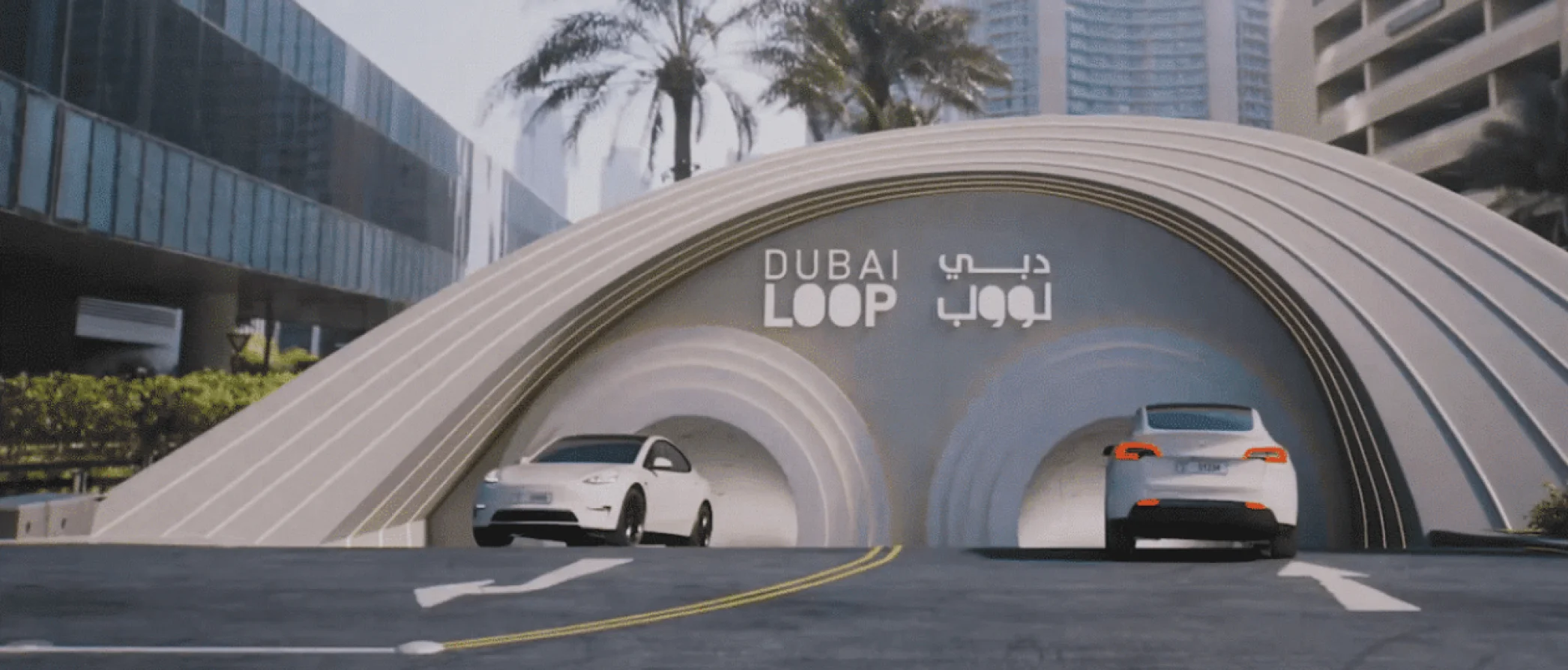
Dubai has long been known for investing in infrastructure well ahead of demand. With a rapidly growing population, expanding business community, and increasing number of visitors, the city continues to invest in roads, metro lines, and other public transport solutions. Its latest initiative, Dubai Loop, is a next generation underground transportation system designed to dramatically improve mobility between the city's busiest destinations.
The project is being developed through a partnership between Dubai's Roads and Transport Authority (RTA) and The Boring Company, founded by Elon Musk. The project has now moved from the planning stage into construction, with production officially underway for the precast concrete tunnel segments that will form the structure of the underground network.
Dubai Loop is not intended to replace the metro. Instead, it is designed to complement the existing transport network by providing the fastest possible connection between key business, commercial, and administrative districts.
The system will transport passengers using autonomous electric vehicles. Travelers will request a ride at one of the stations, and the vehicle will take them directly to their destination without intermediate stops. Unlike a traditional metro system, vehicles will not stop at every station along the route.
The vehicles will operate inside purpose built tunnels measuring 3.6 metres in diameter. These tunnels are designed exclusively for the Dubai Loop system and will not be accessible to conventional road traffic.
According to The Boring Company, the network will operate more like an underground highway than a traditional metro. The electric vehicles are expected to reach speeds of up to 240 km/h, significantly reducing travel times across the city.
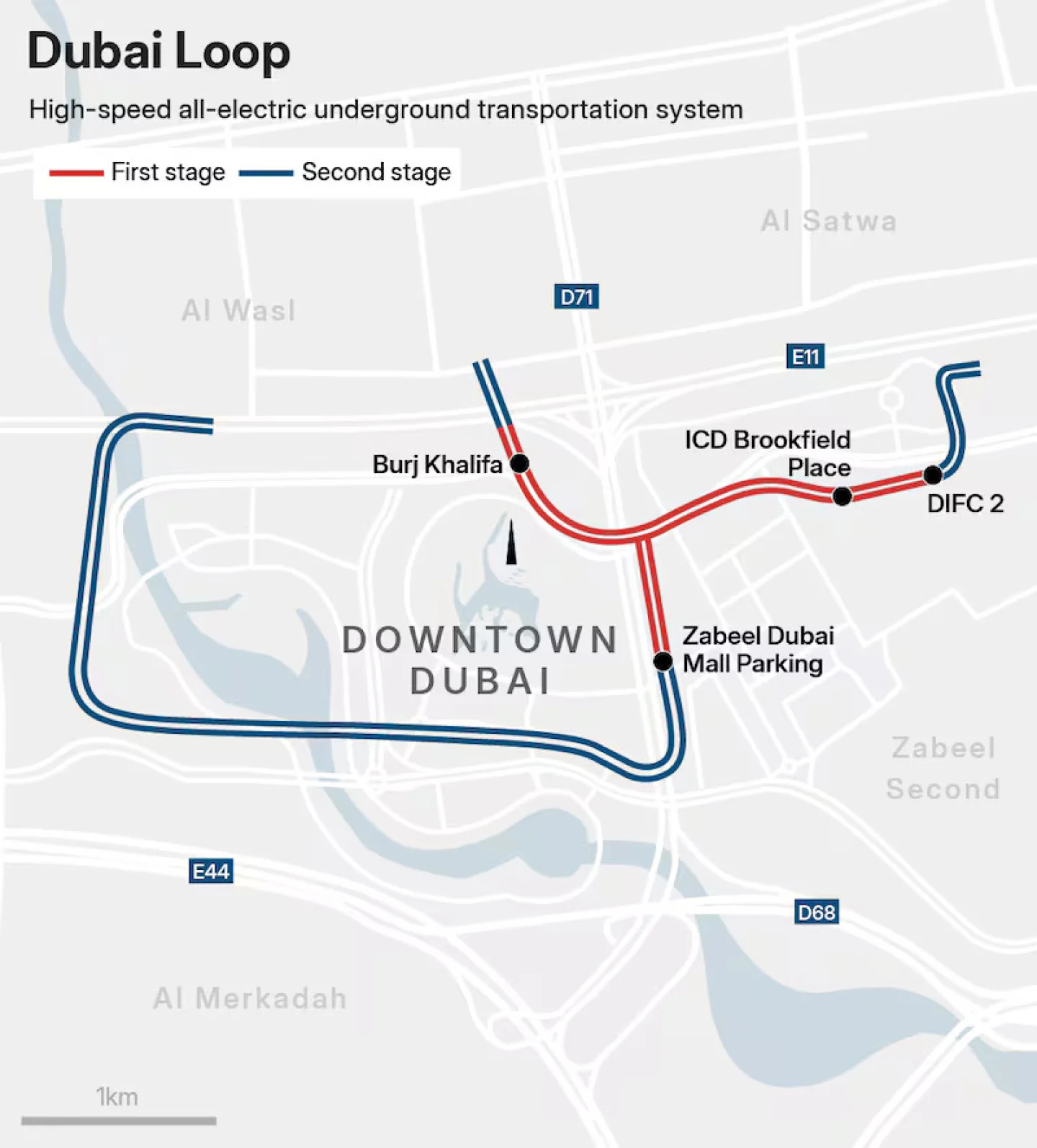
The first section of Dubai Loop will extend 6.4 kilometres, connecting DIFC, ICD Brookfield Place, Za'abeel Dubai Mall Parking, and Burj Khalifa Dubai Mall.
The most noticeable improvement will be for commuters travelling between Dubai's financial district, DIFC, and Dubai Mall. A journey that currently takes around 20 minutes is expected to take just 3 minutes once the system becomes operational.
The first phase represents an investment of approximately AED 565 million. Around 25,000 precast concrete tunnel segments, with a combined weight of 45,000 tonnes, will be used during construction. Completion of the first phase is expected within approximately two years.
The initial route is projected to carry more than 13,000 passengers per day.
The first phase is only the beginning. In the coming years, Dubai Loop is expected to expand into a network of approximately 24 kilometres with 19 stations, connecting the city's most important business, financial, and residential districts. Once fully completed, the system is expected to accommodate up to 30,000 passengers per day.
Another advantage of the project is its compact station design, which requires very little space and allows stations to be integrated even into densely developed urban areas. The system will also feature advanced safety measures, including emergency exits, fire protection systems, ventilation, and dedicated communication infrastructure for emergency services.
Dubai Loop is another example of Dubai's long term approach to urban development. Rather than responding to future challenges, the city continues to invest proactively in infrastructure that supports sustainable growth, improves mobility, and reinforces Dubai's position as one of the world's most innovative cities for residents, businesses, and investors.